“Jordan felt a similar desperation to be Silvia’s friend that she’d once felt with Trace. It was something she wanted to tamp down inside herself. It seemed so embracing to pine for friendship, but something about Silvia was addictive.”
If the Fleetwood Mac album Rumours were a book, it would be Saturn Returning. Messy relationships, a yearning for personal growth, and a determination to forge one’s identity are wrapped up together with one bow in Kim Narby’s debut novel.
Saturn Returning looks at the gravitational bond between three women—Jordan, Trace, and Silvia—over the course of a decade. Their romantic entanglements and secrets are revealed, judged, and gradually accepted as the narrative unfolds across the past and present, culminating in the year of their Saturn return.
Sapph-Lit, an imprint of the indie company Bindery Books that was born out of the queer BookTok community, published the story, making it their first release. What’s special about Bindery Books—and its multiple imprints like Sapph-Lit—is that the publisher partners with online book influencers named “tastemakers” who seek out stories and foster communities. The platform’s mission is to achieve better representation on bookshelves, making sure all identities are celebrated and voices are heard.
The novel upholds this mission by providing queer representation that is both entertaining and realistic. At no point was I ever bored reading this love triangle. Yes, this is the intended nature of the relationship narrative device, but the main characters were so unlikeable that there was no side of the triangle that I felt should live happily ever after. And I mean this in the best way possible. I appreciated the lack of rose-colored sensationalization when it came to the romance, as it made Jordan, Trace, and Silvia much more tangible.
Just like any unstable relationship, Narby presented the connection between the three women as equivalent to war. Just like allies, these characters were at their strongest when they were together, aligning their goals and energy to their friendship. But once they turned against each other, they took that power and ensured mutual destruction.
The core underlying motivator across Saturn Returning was the gravitational pull that brought the women together. The astrological influence found in the novel, as well as the recurring role of tarot, showed how there is no other universe where this love triangle does not happen. Fate, or the otherworldly energy that encircled them, played the unspoken fourth member in their bond. Yet, their predetermined nature did not make them any less complex. Seeing them make choices within the confines of their celestial roles was boundlessly interesting.
After finishing the novel, the first literary comparison to the theme of fate that came to mind was Shakespeare’s plays. Like a play unraveling on a stage, the conclusion has already been written. In Shakespeare’s case, he utilizes fate to unveil an unstoppable sense of doom and emphasize dramatic irony. Although doom may not be the right word for Narby’s ending, a bittersweet feeling still prevailed. And, like dramatic irony, readers could see the character’s motivations unfold from miles away, highlighting their relatability.
Overall, my experience with the novel was a breath of fresh air. Witnessing queer characters operate on the page with real depth and complexity rather than simply caricatures made reading so memorable. You can plainly tell that Narby wrote from her own knowledge about sapphic relationships and sexual self-discovery, which brought an unmistakable sense of authenticity that is rare to come by. Who needs reality TV when you could read Saturn Returning?
Rating:
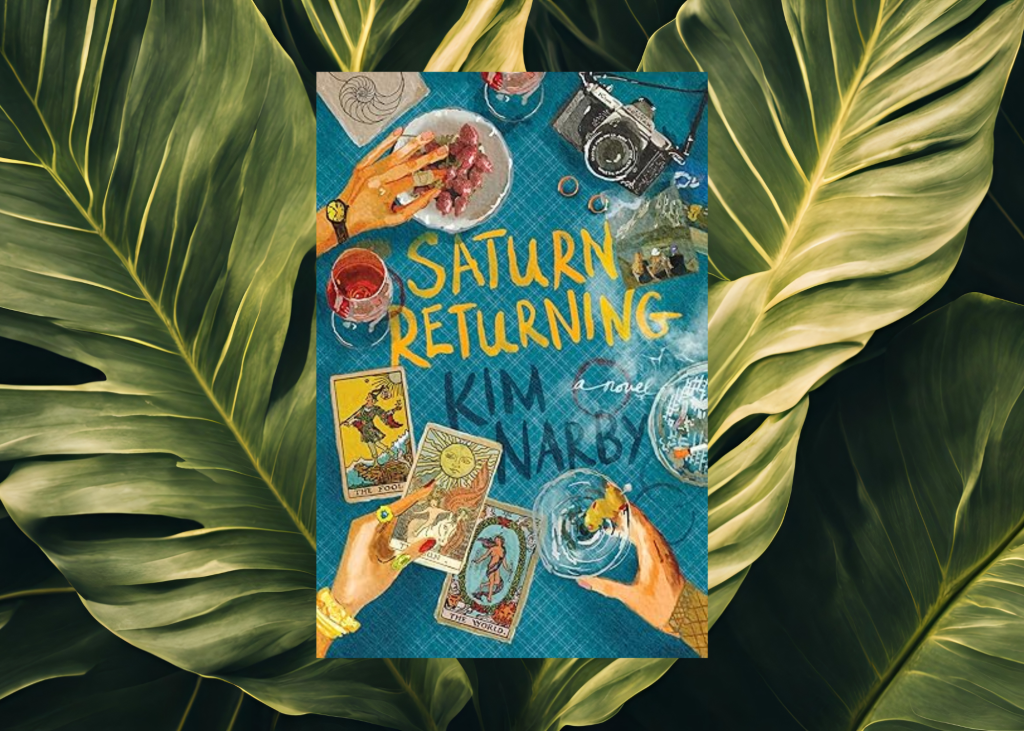
Image taken from Amazon.

Leave a comment