
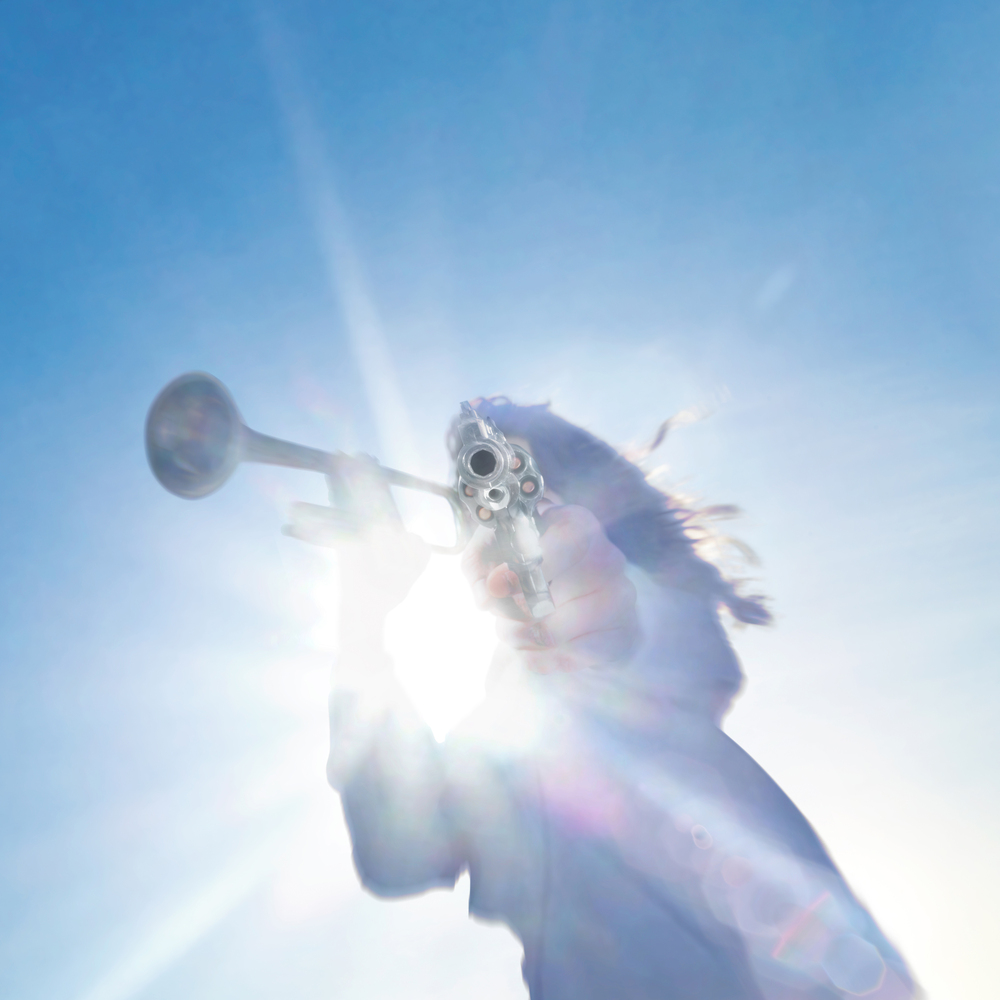
Geese is comfortable with chaos, but on Getting Killed, they learn to embrace it to the max. The Brooklyn band’s fourth studio album stands out among their previous releases, catapulting the group into mainstream spotlight. Geese may be rising to fame, but their lyrics and musical instincts remain rooted in that same gritty unpredictability that made them compelling in the first place. Getting Killed is Geese’ best work; a record that feels self-aware of its own destruction and somehow stronger because of it.
The band’s prior release, 3D Cowboy, had a definite genre: indie-rock. Getting Killed goes in a slightly opposite direction. It’s still indie-rock, but with a mix of alternative and an “I don’t care” attitude. Geese created a genre-mixed album to mimic its very themes of confusion and disillusionment in the modern age.
Geese consists of Emily Green (guitar), Dominic DiGesu (bass) and Max Bassin (drums). Leading the pack on vocals, keyboards, guitar is Cameron Winter, whose voice is incredibly unique yet an acquired taste to most. His lyrics often paint concrete images of fleeting moments in time, but at other instances, feel intentionally abstract, probably even to Winter himself (as solidified in “Husbands” line, “I’ll repeat what I say / But I’ll never explain it.”) Across its eleven tracks, Getting Killed feels like an album that belongs entirely to the modern age—one of loneliness, love, and doom in a world on fire, whether personal or collective.
Doom takes shape in the form of war, taxes, and even highway traffic. The opening track, “Trinidad,” sets this uneasy tone immediately: Winter mutters about “try[ing] so hard” before the thought is violently cut off, lyrically and musically, by the sudden image of a “bomb in my car.” Jolting the listeners into a harsh reality compared to thoughts painted in the narrators mind, “Trinidad” sets the pace for the whole album.
Geese also turns their lens toward relationships, though rarely with warmth. Human connection here is explained with detachment, even hostility. In “Au Pays du Cocaine,” the female love interest barely acknowledges the narrator, who still pleads, “You can stay with me and just pretend I’m not there.” Even on the deceptively tender “Cobra,” intimacy is reduced to performance, as the back-and-forth between man and woman is likened to a cobra dance, something that is repetitive and dangerous.

The title track, “Getting Killed,” the album’s bleakness expands to encompass modern pressures at large. The phrase itself suggests not a voluntary death but one imposed by external forces. “I have been fucking destroyed by this city tonight / I’m getting killed by a pretty good life,” Winter sings, turning tender images into ones of death and despair.
Loneliness takes shape on tracks such as “Islands of Men,” where Winter’s pleads, “You can’t keep running away,” a line that could be directed at ideas just as easily as it could at real people. Yet, just as quickly, the mood pivots outward into “100 Horses,” the album’s standout. “All people must smile / In times of war,” Winter insists, shifting the mood from private isolation to a collective struggle.
This shift culminates in the album’s final track, “Long Island City Here I Come.” The song paints an image of the narrator inching home through Long Island traffic, mirrored in the refrain, “Nobody knows where they’re going / Nobody knows where they’re going except me.” Along the way, Winter invokes figures like the Lord, Joan of Arc, and Buddy Holly, all idols the narrator seems to measure themselves against, people they long to emulate. In an album where nothing feels certain, Winter closes with a rare moment of clarity: “I have no idea where I am going / Here I come.” It’s a paradox that somehow lands as a hopeful, final gesture of resilience in an otherwise dissonant, chaotic world.
Geese is no stranger to the concept album, as seen in 3D Cowboy, but Getting Killed’s ideals are insanely human that the band creates an album anyone can listen to and find a track with which they can relate. This universality is being seen, and Geese is starting to catapult into the mainstream spotlight. With interviews in Rolling Stone, The Atlanic, and GQ, it’s safe to say that Geese won’t be “underground” for much longer.
Photo taken from Partisan Record Store

Leave a comment