
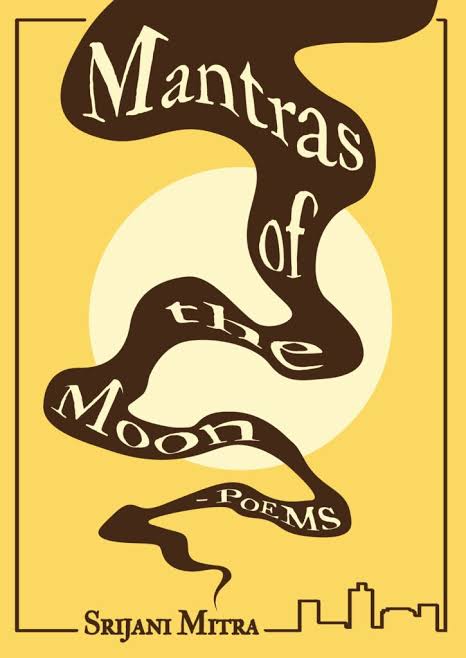
Srijana Mitra’s collection of poems, Mantras of the Moon, reflects an appreciation and longing for one’s culture and past heritage.
Mitra herself is a writer based in India who has spoken at many literary festivals (Mangalore Lit Fest and Shoolini University Literary Festival, to name a few). She’s been published previously in publications such as Certain Age Magazine and ItGetsBetter. Mantras of the Moon is Mitra’s first poetry collection, and it is a strong reflection of her written voice and what she cares most about.
Mantras of the Moon, published by Red Rook Press through the University of Alabama, opens with an author’s note explaining the deep connection Mitra has to both the collection of poems and to what the collection illustrates: her culture and heritage of where she and her elders grew up. This bleeds into the collection seamlessly with some incorporation of Mitra’s own knowledge and appreciation of psychology and mythology related to that heritage.
Structurally, the collection introduces more variation in its poem layouts as it progresses, which helps the overall flow. The variety of layouts that occasionally come up throughout the collection helps to segment overall without taking the reader out of the stories being told.
The poetry collection opens with “At the Haridwar Ghat (Har ki pauri, 2016).” This piece works great as an opener to the collection, as it has strong cultural connections depicted throughout the piece with lines such as “It was almost as if/We watched a tiny glimpse, really a span of time/A momentous revelation eclipsed/Of how our lives and ribs/would eventually shape/Burning and dousing, taking in all the warmth to only, eventually/Give back to the silence of the river, ocean, sea.” This poem has clear depictions of youth and the reflection of such, coming together as a story of looking back at memories that mean the most to Mitra.
Towards the middle of the collection is “Frames.” This poem has, personally, one of my favorite lines: “It feels like a trail of huddled past cupped together in the lone, rattling through a portal/of flashbacks, nudging me into believing/All of those ashen bits of mucky dreams can be true.” “Frames” reflects the experience of looking back at previous experiences through a negative lens, which comes through in the line previously mentioned with phrases like “mucky dreams” and “rattling through a portal”. That being said, it does still have a hopeful and appreciative tone to it, even with the dark subject matter.
Mantras of the Moon also has some classic love poems, like “What I desire this summer day.” This piece to me feels very classic in the language used and the experiences that Mitra is trying to convey in her writing (“This summer day,/I want the safety of your breath, soft/Blooming blueness of skins blemishing/In touch, in thrill, in wildfire.”) This poem also does a great job at creating a feeling related to the seasons as this poem feels very spring/summer, and Mitra does a great job using her writing to let the reader feel the feelings associated with these seasons of happiness, reminiscing, and rebirth into something new.
Mantras of the Moon ends with “Springs,” a poem that beautifully captures what the collection does so well throughout: using the seasons to convey complex emotions. Focused on spring, the poem is reflective yet appreciative, embracing themes of renewal, growth, and change while maintaining the collection’s thoughtful and introspective tone. This poem radiates the colors associated with spring and the feelings of happiness, warmth, and overall appreciation. This poem also details the process of looking back into girlhood as a grown woman and reminiscing on those times now that they have passed, but doing it beautifully instead of in a lens of regret (And a voice within—even though I am a woman now,/Still the same, in searching this way, this ambush/Of love, this veined sand bristling for/Some taste in the pink of tongue). Similar to “At the Haridwar Ghat (Har ki pauri, 2016),” “Springs” is a great way to tie the collection together as a reflective but appreciative piece.
Overall, Mantras of the Moon is a great display of Mitra’s writing abilities in the ways that she can convey a memory or feelings through her writing. The collection is also a display of what Mitra cares most about, and that care translates clearly to the reader as the collection continues.
Photo taken from Red Rook Press

Leave a comment