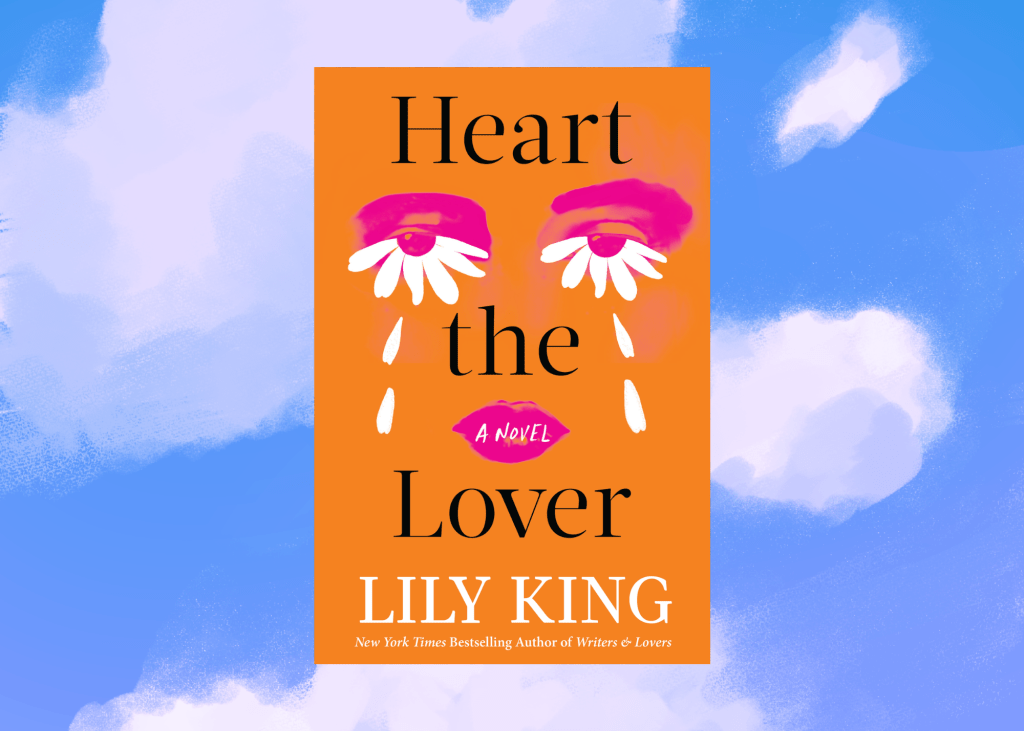
With no pun intended, I am a lover of Lily King. She is the ultimate indie literary darling, frequently appearing on the Indie Next List and loudly supporting independent booksellers; King provides a proud voice within the multifaceted community of indie writers. So, naturally, I needed my hands on Heart the Lover as quickly as possible, which I succeeded in. Immediately, I realized this book is a prequel and sequel to Writers and Lovers, one of my favorite novels of all time. Perhaps this gave me rose-colored glasses as I dove into King’s most recent release, but I still have an endless list of thoughts while in this state of post-reading.
Published by Grove Press, a fellow voice in the community of indie storytelling, Heart the Lover chronicles the creative life of the narrator, who is given the nickname “Jordan” by two fellow students, Sam and Yash, whom she meets in college in the 1980s. These three characters form a complicated love triangle riddled with grief and passion. Framed in two parts—college, and then post-initial success as a writer—this novel paints a detailed picture of connections that last decades with outstanding emotional depth.
First of all, I don’t believe that Writers and Lovers is required reading before someone starts Heart the Lover. It is true that if one does read it, then they’d comprehend more references and have a deeper awareness, specifically, of the narrator’s character. But King does an amazing job of allowing Jordan to cultivate a personality that feels fuller than that of the average recurring character in a prequel or sequel. So, certainly do not let its relationship to Writers and Lovers get in the way of devouring this book.
Confession: I have love triangle fatigue. I find this age-old romance trope in so many pieces of media to the point where I actively avoid it. Naturally, I got the tiniest bit exhausted by the triangle shenanigans in Heart the Lover, but I’ve never been more captivated by this trope than I was reading the interactions between Jordan, Sam, and Yash. This is especially true because I couldn’t see Jordan and Yash falling for each other until it all of a sudden hit me in the face as an obvious choice. There was no foresight or calling it from a mile away (despite it being in the novel’s plot blurb). And perhaps it’s King’s sneaky message of love finding you when you least expect it that infiltrated the love triangle, for which I am eternally grateful.
I appreciated the split between the first half (college) and the second half (novelist career). It was perfectly jarring to move from one to the other, emphasizing how reality changes over the stages of one’s life. Jordan’s retrospection and somber nostalgia beautifully contributed to the human tendency to shift around the past and never truly live in the present. The endless “what ifs” were cathartic to read and furthered the interesting yet endless discovery of King’s characters at the hands of the audience. Examining the foundational necessity of early relationships and how it shapeshifts over time was, to say the least, devastating to read.
This rollercoaster of emotions between the first and second halves wasn’t melodramatic, nor did it feel like the author forcing readers to feel something as a lame attempt to create something “meaningful.” Rather, it is a reminder of how love exists in our lives. Obviously, with “love” in the title, this book would be about romance and heartache and everything in between. In reality, it’s quiet, it’s lingering, and, most importantly, it’s the underscoring heartbeat. Every interaction between the characters, no matter if it’s Jordan with Yash or Jordan with her mother, feels intimate and raw, almost like a found footage recording. It brings a full spectrum between joy and pain, but it never makes love seem like something to regret. Love is not just felt, but it is experienced.
Outside of the plain yet elaborate theme of love, Heart the Lover advocates for the young artist. The novel’s structure allows Jordan’s journey from an aspiring young writer to a successful author to connect with fellow creatives, as they can simultaneously place themselves in her shoes and visualize their futures. The importance of finding a singular voice in a sea of intimidating intellectuals praises unconventionality that can sometimes be hidden as a response to camouflaging with the safe mainstream.
Real life coexisting with the fictional life of a creative mind is studied in King’s dissection of personal tragedy and the art that can grow from it. It underlines that an empowered individual identity and having the past inspire and not define one’s work is the result of love in every sense. As readers learn Jordan’s real name, “Casey,” in the second segment of the novel, she is not only vividly seen, but so is every person who is veiled with retrospection. The art and the person are equals, hands clasped in an eternal partnership, neither defining the other, just simply whispering truths and memories that constitute the human condition.
Rating:
Image taken from Amazon

Leave a comment