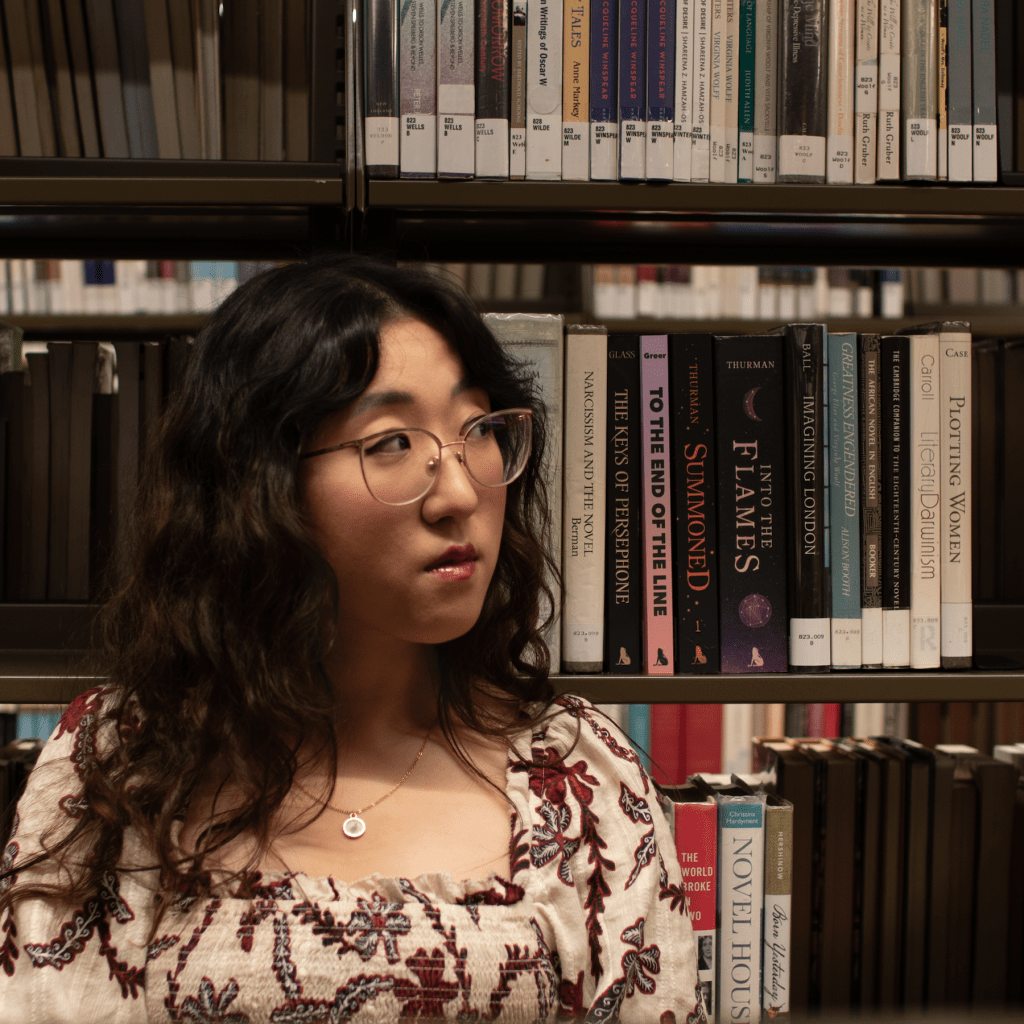
When Jamie Ryu speaks about publishing, she speaks with the passion of someone who has loved books her entire life, yet with the urgency of someone disillusioned by the realities of the industry. As the workforce shrinks in the current economy and diversity becomes a back-burner thought, Ryu focuses on building something new.
Her passion extends beyond good books; it encompasses humanity, publishing stories of those who are told there is no space for them in this industry. Contrarian Publishing was born of that frustration. A company made for the people who don’t want the red tape traditional publishing seems to offer, Contrarian Publishing is where authors choose their own paths.
“I started this company (Contrarian) that is meant to uplift authors who are telling stories that are still incredible, that readers will absolutely love, but traditional publishing doesn’t quite want,” Ryu explained, “or for an author who doesn’t know exactly how to get their concept over the finish line. We’re able to help with that, which trad pub (traditional publishing) doesn’t.”
As a Korean-American queer woman, Ryu understands the realities marginalized groups face, especially in publishing, where the turnover rate for marginalized workers is so high: “It’s difficult to survive.”
It’s quite ironic. Publishing is one of the few fields dominated by women; most of the workforce is women. This being said, you’ll begin to see a big disparity in the higher-ups, or the decision makers. Those roles are primarily held by men, and ultimately, those are the people making the decision on whether or not authors get published. The less representation held in those spaces, the less marginalized authors can get published.
It’s a corporate food chain. The author submits to an agent, the agent signs the author, submits authors to editors, editors submit to an acquisitions meeting, and then they decide what happens to that book. It is in the hands of the publisher, the marketing team, publicity team, and most importantly, sales. The author simply waits. Sometimes people just don’t have the best sense of grammar, sometimes a storyline is incomplete, but most agents follow the same pattern as traditional publishing companies, where it’s predominantly non-marginalized people. The bulk of the work comes from convincing this non-marginalized person to sign a marginalized author.
“There are a lot of people in the workforce who do want to uplift marginalized voices, who aren’t able to quite do that yet,” Ryu added. “There are a lot of accessibility issues and a lot of different factors that make it very difficult to survive as a marginalized person in publishing.”

In a lot of ways, people who are marginalized or who want to uplift marginalized voices are meeting a lot of obstacles. The disparities in salaries, the increasing rates of burnout, the unspoken requirement to live in high-cost-of-living areas like New York City, and the lack of healthcare benefits all add to the strain.
Ryu spoke about her own experiences at the beginning of her career. “When I was working in trad pub, I had four roommates,” she began. “One of them was my partner, but I was very, very lucky that we had a larger space—in not so great an area, technically speaking—but we all liked each other and lived in harmony.” She continued, “It is up to the people with privilege to open doors for the people who don’t have privilege, and publishing makes that very difficult across the board.”
Contrarian combines self-publishing and traditional publishing, otherwise known as a hybrid system. Its purpose is to help authors bring their books to traditional standards in an environment that truly believes in their work and their story. Readers are looking for authenticity; they want to see representation, which the traditional publishing sphere is falling short on. “Most readers don’t care where a book comes from, they care if the book is good,” Ryu explained. “I don’t think publishing should be for one kind of person. If you want to put in the work, I’ll put in the work. If you give us a lump of coal, rather than an unpolished diamond, if you’re willing to add the pressure, we can help you.”
Contrarian Publishing was founded in March 2024. Its first official release, a binding of an author’s works, came that same fall of 2024. Its the first original title released in March 2025. Now Contrarian is anticipating their ninth title, releasing in January 2026.
“It’s really up to publishers. If a publisher thinks that a book is not going to do well because only Asians are going to be interested in it because the author is Asian, that’s just categorically untrue,” Ryu said. “I’m hoping that we continue to support marginalized creators, workers, and authors both. I hope that publishing is able to really invest in and uplift stories of BIPOC people, of disabled people, of any mix of those things, because ultimately, stories are human. Stories are how we relate to one another, and if we don’t publish stories that give us different perspectives, where are we going to end up as a society?”
Photos courtesy of Jamie Ryu / Interviewed on November 14, 2025

Leave a comment